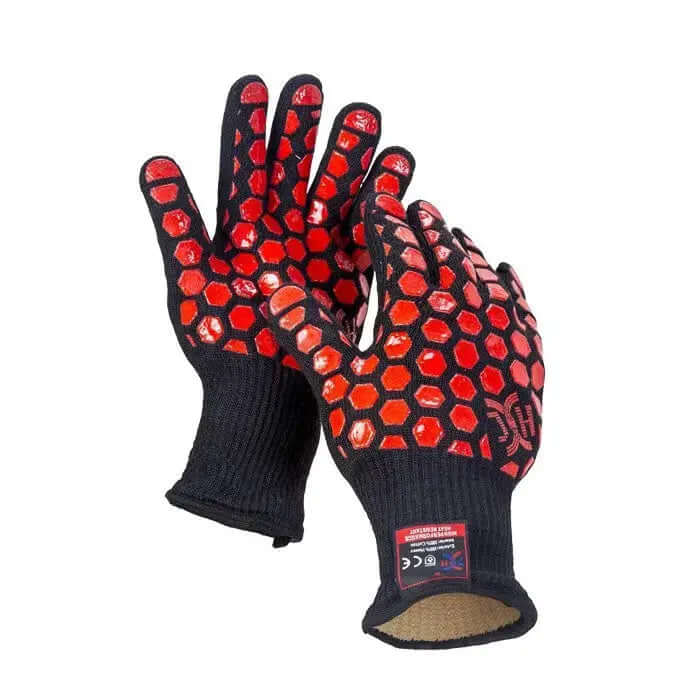
Heat-Resistant Gloves
Heat-Resistant Gloves
Couldn't load pickup availability
Heat-Resistant Gloves are protective gloves intended for tasks involving heat exposure where the glove's heat-resistance rating is appropriate for the hazard. Check the product specifications against the specific task and exposure conditions.
Heat-resistant gloves can be useful around laboratory heating equipment, hot glassware, workshops, fabrication areas, and other technical environments. Protection varies according to contact temperature, exposure duration, radiant or convective heat, glove condition, and the glove's heat-resistance rating. These gloves should not be described as providing unlimited or universal heat protection.
Before using Heat-Resistant Gloves, inspect both gloves for tears, punctures, worn areas, contamination, damaged seams, or other deterioration. Replace compromised gloves rather than relying on damaged protective equipment. Keep the gloves dry and clean when required by the task, since contamination or moisture can change protective performance.
Choose personal protective equipment based on a hazard assessment for the actual work being performed. Heat-resistant gloves do not replace appropriate tools, guards, ventilation, eye protection, protective clothing, or safe handling procedures. Avoid direct contact with open flame, molten material, chemicals, or energized electrical equipment unless the glove's specific documentation explicitly covers that hazard.
Heat-Resistant Gloves provide a PPE option for compatible heat-handling tasks. Browse additional hand and eye protection in our Nitrile Gloves and Laboratory PPE collection.
Related Products
laboratory beaker tongs: Select handling tools suited to the vessel, temperature, and task.
Product Q&A
What protection information should I check?
Check the product specifications against the heat hazards and exposure conditions of your task.
Do these gloves protect against every heat hazard?
No. Protection depends on the documented rating, temperature, exposure duration, condition, and type of heat exposure.
When should the gloves be replaced?
Replace gloves with tears, punctures, worn areas, damaged seams, contamination, or other deterioration that compromises their protective function.